8 min read • June 2026
The honest breakdown for dogs who actually do things.
You’ve probably already read three versions of this comparison. They all say the same thing: BioThane is waterproof, leather looks great, nylon is cheap. Fine. But if your dog is doing anything beyond a leashed neighborhood walk — hiking, hunting, training, swimming, running a Fi tracker or an e-collar — you need more than a pros and cons list.
Here’s the comparison that accounts for what dogs actually do — including the section about e-collar and GPS tracker use that every other guide skips entirely.
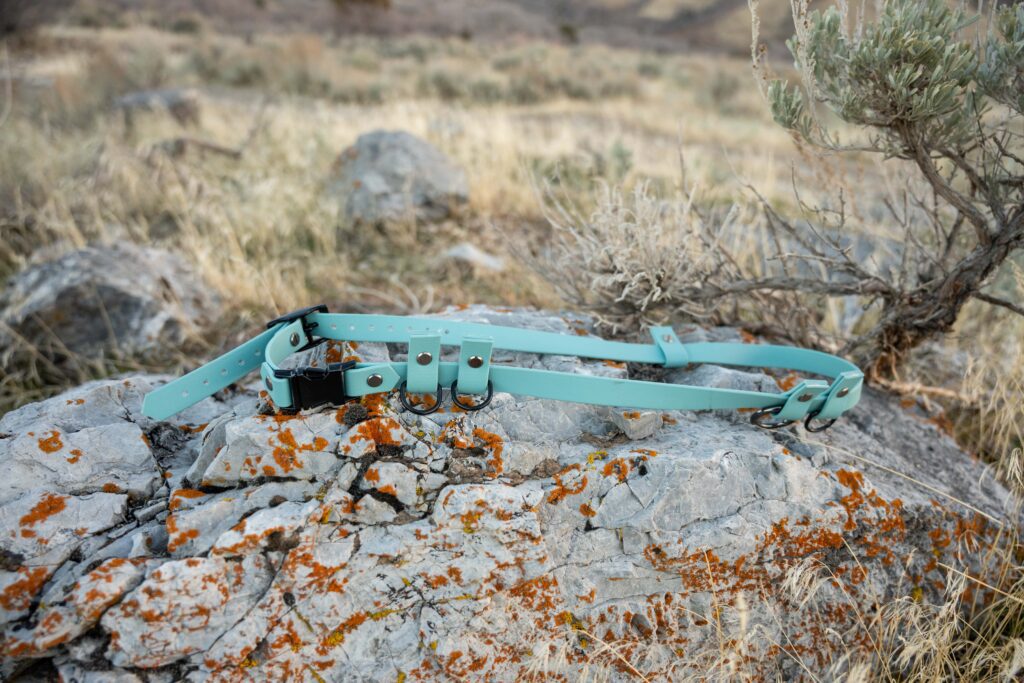
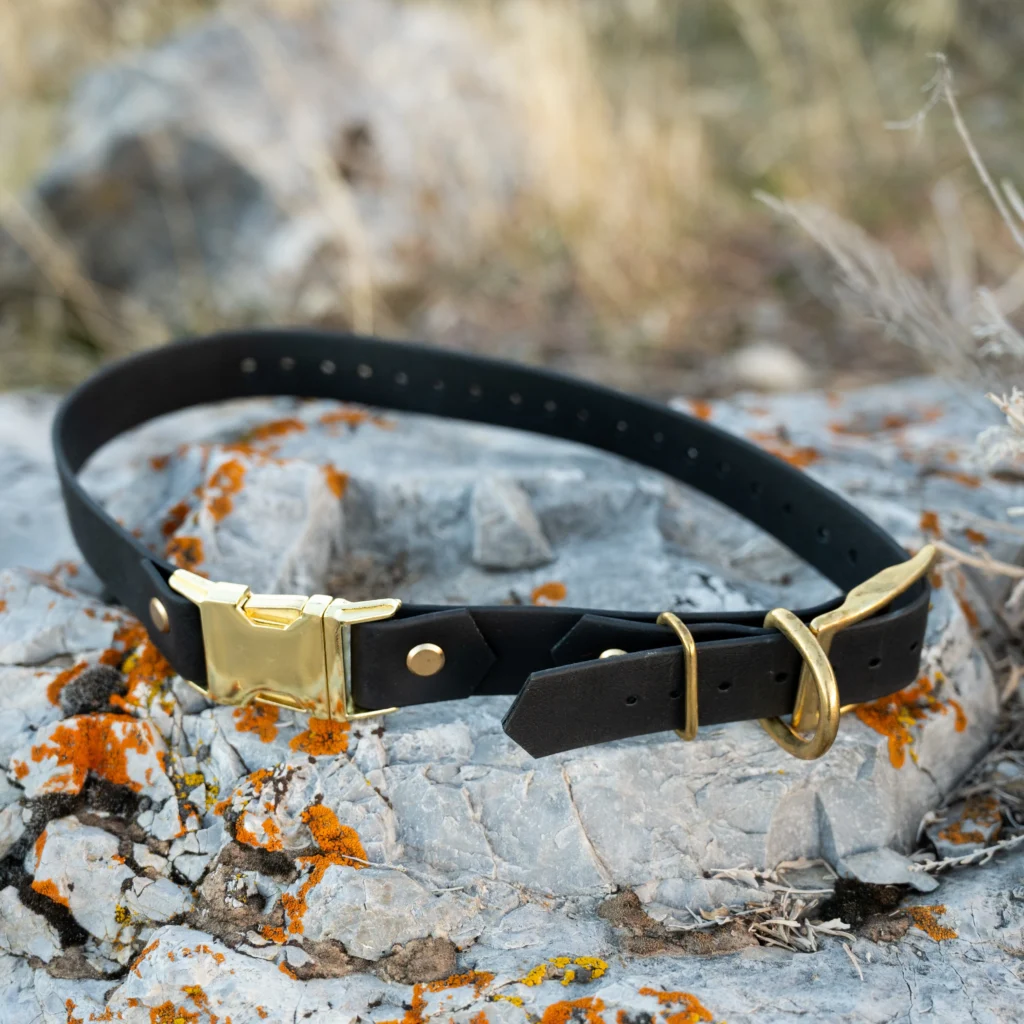
BioThane routinely lasts 5-8 years under regular use. Professional trainers who put gear through daily abuse; mud, sand, saltwater, rough terrain have reported leashes lasting 10+ years. The coating protects the polyester core from UV damage, moisture, and abrasion.
Quality leather, with diligent maintenance, can reach 3–8 years. In practice, with average busy-owner care, it’s closer to 1–2 years before cracking or mold appears. Every wet-and-dry cycle costs the material something.
Nylon is a 6–12 month proposition for active dogs. UV weakens the fibers, fraying starts at hardware stress points, and colors bleach out within a season.
by a margin that makes the price difference irrelevant within the first year.
Nylon stinks from bacteria. Leather smells from mold. Two different failures…same outcome.
Nylon smells bad because it absorbs moisture and bacteria … the wet dog leash smell that doesn’t fully wash out.
Leather smells bad for a completely different reason: repeated soaking and drying promotes mold and mildew in a naturally porous material.
BioThane is non-porous. Water beads off. Bacteria can’t penetrate the coating. Mud sits on the surface until you wipe it off. There’s nowhere for odor to live. A quick rinse after a hard day out and it comes out the other side smelling like nothing.
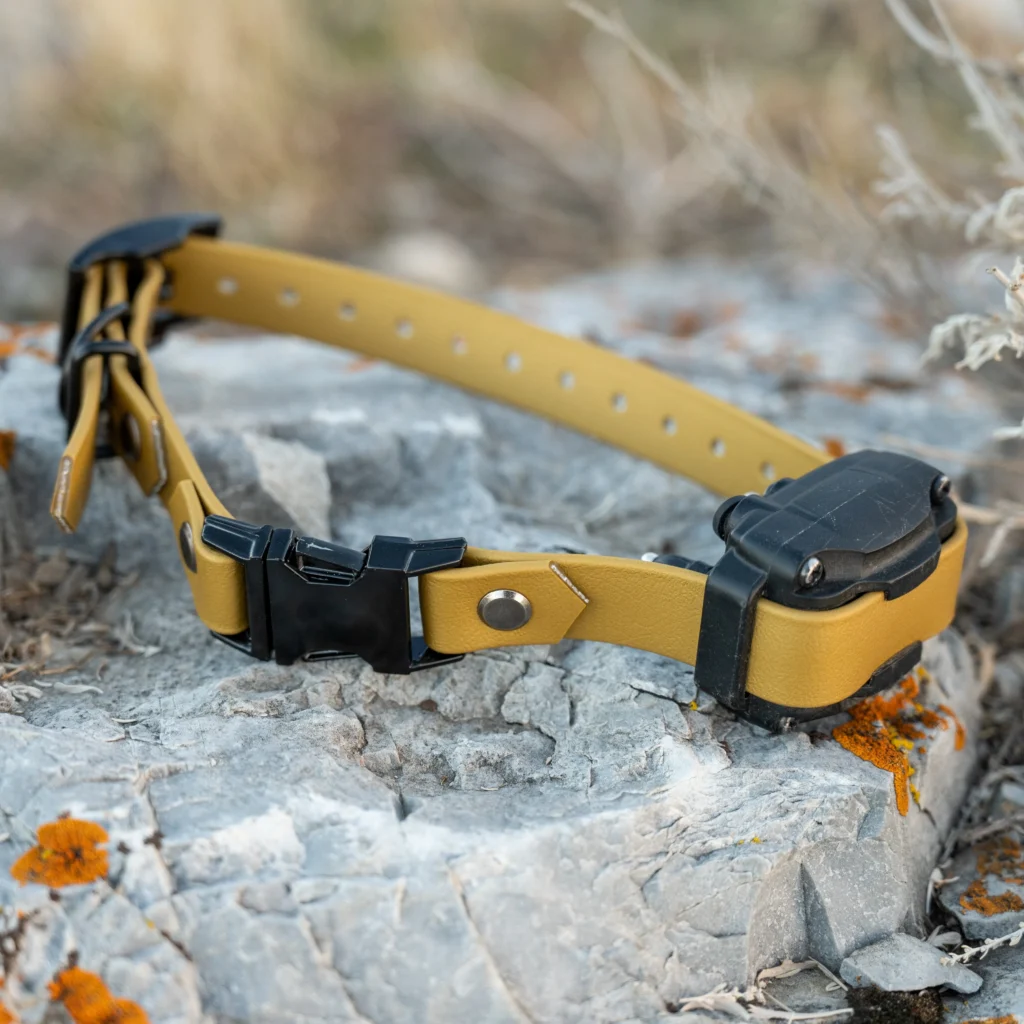
The receiver unit sits agains the collar contantly. Nylon absorbs liquid and bacteria all around the unit. Leather softens and darkens unevenly at contact points and can grow mold in the enclosed spaces. BioThane is the universal standard for e-collar straps in the professional training world for exaclty one reason: nothing gets into it. Wipe clean in seconds. no odor development. No material degredation after months of daily use.
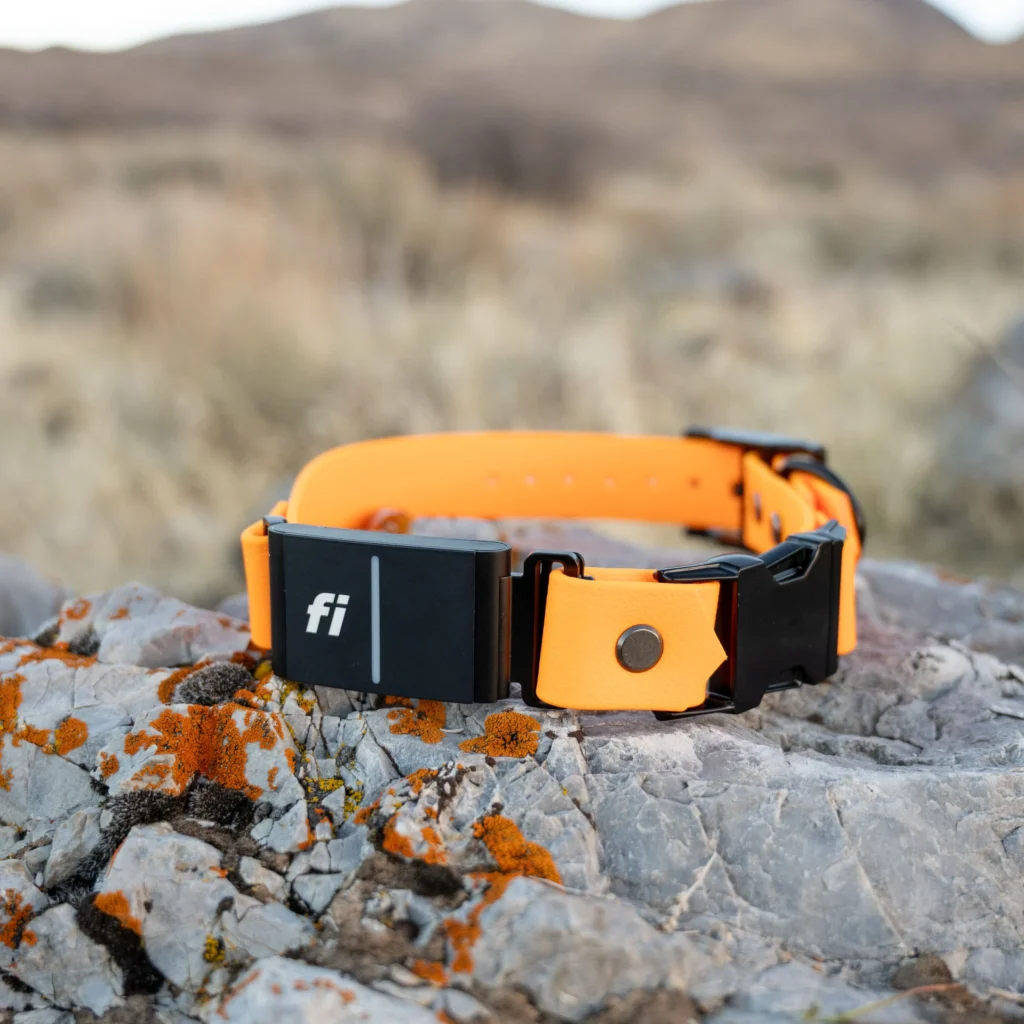
For Fi GPS tracker use: you want a collar that doesn’t absorb moisture all around a device/collar that you’re not removing every night.
At Pimped Out Pup, our entire Fi-compatible and e-collar strap line is built in BioThane because the material is what these use cases actually require.
Initial price is only part of the story. Lifespan determines actual value, and leather’s lifespan depends almost entirely on whether you actually do the maintenance.
UPFRONT COST
$40-50
REALISTIC LIFESPAN
5-8 year of reular use
MAINTENANCE COST
$0 – rinse and go
TOTAL OVER 8 YEARS
~$50
$60-80 collar + conditioner over a realistic 5-8 years
Same collar replaced every 1-3 years without upkeep
UPFRONT COST
$10-20
REALISTIC LIFESPAN
8-12 months for active dogs
MAINTENANCE COST
low – burt washing degrades it faster
TOTAL OVER 8 YEARS
~$120-180 in replacements
BioThane wins on cost for most active dog owners even with conservative numbers. Leather i genuinely compeitive IF you condition it monthly and protect it from water – but most people who need a collar for hunting, training, or trail use don’t have bandwidth for that routine. If thats you, the math isn’t close.
For most active dogs: yes. BioThane has leather’s strength and comfortable feel, plus complete waterproofing and zero maintenance. The honest case where leather wins is a low-activity dog with an owner who genuinely enjoys the maintenance routine.
With regular use and basic care, a well-made BioThane collar lasts 8-10 years. Professional trainers using BioThane daily report gear lasting 10+ years. It simply doesn’t have the failure modes; much slower UV degradation, no moisture damage, no fraying.
It’s the only material that wipes clean between sessions, doesn’t degrade under constant receiver contact, and doesn’t absorb liquids and oils that cause odor and material breakdown. In a multi-dog environment, that santizability is non-negotiable.
Yes. Rinse with fresh water after saltwater exposure and let air dry. The non-porous coating prevents salt absorption.